
Building a deck frame is the foundation of any successful decking project. Whether you’re installing a timber deck or a composite decking system, a well-constructed frame ensures stability, long-term durability and a consistent surface for the deck boards.
For DIY enthusiasts and installers alike, understanding the structure beneath the deck before you start is critical. Careful planning, correct preparation and proper installation techniques help keep the frame level, secure and compliant with local building requirements.
Here, we’ll break down the essential components of a deck frame, the preparation required before construction and the steps involved in installing a stable base for your decking boards.
Key Deck Frame Components
A deck frame is built from several structural elements that work together to support the deck surface and distribute weight evenly:
- Stumps (sometimes referred to as posts or piers) provide the vertical support for the deck frame. They transfer the load of the deck into the ground or footings and determine the overall height of the structure.
- Bearers are the primary horizontal beams that sit on the top of the stumps. Their role is to carry the weight of the deck frame and distribute that load across the supporting posts.
- Joists run perpendicular to the bearers and provide the surface on which the deck boards are fixed. They create the structural grid that supports the decking and helps maintain an even surface.
- If the deck is attached to a house or other structure, a ledger board connects the frame to the building. This has to be securely fixed and properly flashed to prevent moisture ingress.
- Deck boards from the visible surface of the deck. When installing composite decking, spacing and fixing methods should always follow the relevant installation guide for the chosen product.
Together, these components form a stable framework capable of supporting foot traffic, outdoor furniture and other loads while maintaining the structural integrity of the deck.
Planning
Planning is one of the most important stages of building a deck frame: do not neglect it. Taking the time to plan correctly helps prevent structural issues, costly changes and delays during construction.
To begin, determine the size, shape and orientation of your deck. Be mindful of how the space will be used, the direction of the deck boards and how the deck will connect to surrounding structures such as the home, steps or landscaping.
Don’t neglect drainage, ground conditions and ventilation beneath the deck. Adequate airflow reduces moisture build-up, which (depending on your material) can increase the amount of maintenance required over time.
Choosing your deck material
The type of decking you choose will influence how the frame is constructed and the spacing required between structural components. Traditional timber decking remains popular due to its natural appearance and wide availability. However, it requires regular sealing, staining or oiling to remain in peak condition.
Composite decking offers an alternative designed for durability and minimal maintenance. These boards are especially manufactured to resist moisture, fading and insect attacks, and are suitable for a wide range of outdoor environments.
When installing composite decking, you should be following the product installation guide. These guides will outline the recommended fixing methods, board spacing and structural considerations that ensure the deck performs as intended.
Will you have a timber deck frame or an aluminium decking frame?
Deck frames are usually constructed from either treated timber or aluminium systems, with each option offering different advantages.
Timber deck frames are widely used and can be built using commonly available materials and construction techniques. Treated structural timber provides strength and is suitable for most residential deck applications.
Aluminium deck frames offer a lightweight and corrosion-resistant alternative. They are designed to resist rot, splitting and termite damage while maintaining dimensional stability. Aluminium deck frames are typically more expensive upfront however.

Do you intend to picture frame your deck? Will you construct this frame yourself from scratch, or use an established decking base frame kit, like StructurAl?
StructurAl is a complete deck frame system for the construction of low-height decks over solid surfaces: all components are designed to work together for a simple and efficient deck installation and offer strong, rot-proof, ultra-lightweight durability in all weather conditions. Whether you are an experienced installer or not, the use of a framing system can make the project quicker and easier to complete and cost savings can be achieved. Don’t take our word for it, you can see for yourself with the StructurAL video.
The choice between timber or aluminium often depends on project requirements, environmental conditions and the kind of decking system being installed.
Preparation
Once planning is complete, preparation ensures the site is ready for construction and that installation can proceed effectively. This involves gathering tools, confirming site measurements and checking that all required permits or approvals have been obtained.
In this stage you will also be clearing debris from the work area, identifying underground services if necessary and ensuring the ground is suitable for installing posts or footings. Proper preparation helps to minimise disruptions during construction for a safer, more organised installation process.
Tools
Most deck framing projects will start with basics that everyone will recognise: a screwdriver, drill, measuring tape and a spirit level. These essentials allow you to measure, mark, cut and secure the structural components of your deck safely and accurately.
Beyond the basics, there are a couple other tools that’ll help make the process more precise and efficient:
- String lines and pegs for marking out the deck perimeter
- Post hole diggers or augers for creating footings
- Circular saws or mitre saws for cutting framing
- Clamps to hold timber or aluminium pieces in place
- Squares to ensure angles are accurate
- Laser levels for checking overall frame alignment
- Safety and personal protective equipment (PPE)
Having these tools on hand lets you measure, cut, mark and secure each deck component correctly, minimising any errors and making your frame more accurate and durable.
Permits & building regulations
Before construction begins, check whether building permits or approvals are required for your deck. Regulations vary depending on where you are and may introduce limitations around deck height, proximity to property boundaries and attachment to an existing structure.
Local building codes also define structural requirements for deck framing, including load capacity, footing depth and connection methods. Making sure your deck frame fulfills these requirements helps to maintain safety standards and avoids potential compliance issues during or after construction.
Setting Out Your Deck Area
Setting out the deck area involves marking the footprint of the structure on the ground before any posts or framing are installed.
Begin by identifying the corners of your deck and marking them with pegs. String lines can then be used to outline the perimeter and help visualise the final shape of the structure.
At this stage, measurements should be checked carefully to guarantee the layout is square and aligned with nearby structures, like the house. Accurate set-out is crucial as any errors at this stage will carry through to the rest of the installation.
If you’re inexperienced, hire a professional or read the manufacturer’s installation instructions before beginning.
Deck Frame Installation
Once the deck’s area has been marked out, construction of the structural frame can begin. The goal at this stage is to build a strong, stable framework to provide consistent support for the decking boards. Each component must be installed in the correct order so the load is distributed properly through the frame.
Install the stumps & bearers
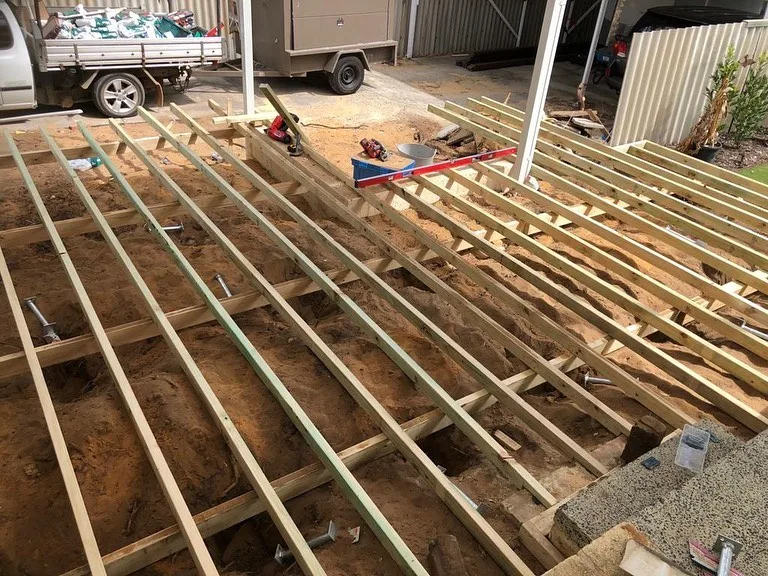
The first step is to install the vertical supports that carry the weight of the deck frame. Post holes are dug and footings are prepared before placing the stumps or posts. These supports should be positioned according to the planned layout and secured firmly in place.
Once the posts are installed, bearers are fixed across the tops of the supports. These horizontal beams create the main structural lines of the frame and provide the base for the joists that will follow.
Verifying that these components are aligned and properly fixed is essential, as they form the structural backbone of the deck.
Install the joists
After the bearers are installed, joists are positioned across them to finish the framework that will support your deck boards. Joists should be installed evenly and firmly to the bearers; spacing between joists will depend on the type of decking being installed and the design of the frame.
When installing composite decking, joist spacing and fixing methods should always follow the recommendations of the relevant installation guide for the product in use. This ensures the boards are benign properly supported and mitigates movement or deflection over time.
Check your frame is level
Before installing any decking boards, the entire frame should be double-checked to guarantee it is level and has been properly aligned.
Use a level to verify that bearers and joists sit evenly across the frame. Any variations should be corrected before proceeding, as uneven framing can affect both the final appearance and structural performance of the finished deck.
Confirming that the frame is square and level at this stage helps prevent issues later in the installation process.
Laying Your Deck Boards
For composite decking, installation guides provide specific instructions for board spacing, expansion gaps and fixing methods. Following these guidelines helps make sure your deck performs correctly in varying weather conditions and maintains its intended appearance over time.
Consistent spacing and alignment will also contribute to a professional finish across the entire deck surface. Below is a very simplified picture of what you can expect to be doing.

Common Deck Framing Mistakes
Even experienced builders can run into issues if key framing principles are overlooked. Being aware of some of the most common mistakes can help ensure the deck frame performs reliably for years to come:
- Insufficient planning – Skipping the planning stage can lead to poor material choices or layout issues that are costly or difficult to fix once construction begins.
- Improper post installation – Posts that are poorly positioned or inadequately secured can compromise the stability of the entire frame.
- Incorrect joist spacing – Joist spacing that does not match the requirements of the decking material may lead to board movement or sagging.
- Ignoring installation guidelines – Composite decking systems rely on specific fixing methods and spacing requirements. Failing to follow the installation guide will most likely affect both performance and warranty coverage.
- Not checking for level – Small alignment errors can escalate into noticeable issues once deck boards are installed, resulting in an uneven surface.
Steering clear of these mistakes ensures your deck frame stays strong, level and secure, providing a reliable foundation for your decking boards.
By planning carefully, choosing the right materials, preparing your site and following correct installation practices, you can build a deck frame that not only lasts for years, but makes the build more straightforward and satisfying.
With a solid frame in place, the next steps (whether laying timber or composite boards) are much easier, giving you peace of mind in the quality and longevity of your finished deck.
Now that you know how to build a deck frame, we encourage you to contact one of the NewTechWood resellers listed here who can sell you everything you need for your project.