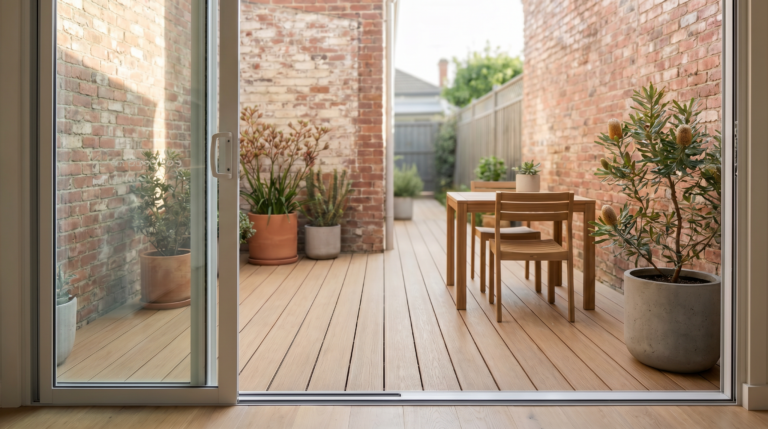
Water marks in wood are a common problem on traditional timber surfaces. Whether they appear as pale rings, cloudy spots or deeper dark stains, they can affect the look of wood furniture, floors and decks. While there are several methods to reduce or remove water marks from wood, none are guaranteed to fully restore every surface.
The best way to avoid this issue is through prevention or by choosing an alternative like composite decking, which is far less prone to water staining than traditional timber thanks to engineering and design.
What Causes Water Marks On Wood?
How moisture penetrates traditional timber surfaces
Water marks happen when moisture interacts with the finish and fibres of a wooden surface. On timber, finishes like varnish, lacquer or oil can slow down moisture penetration, but they don’t make the wood completely impermeable. When liquid sits on the surface, especially without coasters or protective pads, it seeps into the finish and alters the wood’s colour or structure.
The difference between white rings and dark stains
There are generally two types of water marks:
- White rings or cloudy marks form when moisture is trapped in or just beneath the finish layer. These marks are usually surface level and more responsive to removal methods.
- Dark stains occur when water penetrates deeper into the wood fibres, often reacting with tannins and causing permanent colour changes. These stains are harder to remove and may necessitate refinishing.
How to Remove Water Marks from Wood
Please note that none of the following methods are guaranteed; you should always test any DIY method on a small, inconspicuous area first.
Method 1: Mild heat (iron + cloth technique) for white water rings
For light, white water marks, gentle heat can help draw trapped moisture out of the finish. Place a clean, dry cloth over the mark and use a warm iron (no steam) briefly, checking frequently so you don’t overheat the wood. Repeat this in short intervals until the mark lightens.
Method 2: Baking soda paste for surface stains
Baking soda can lift surface-level water stains without aggressive sanding. Create a thick paste from a mix of baking soda and a few drops of water, then apple it with a soft cloth along the grain. Rub gently in circular motions, allowing the paste to absorb the moisture from the stain. Wipe away any residue and dry thoroughly.
Method 3: Mayonnaise or petroleum jelly for light marks
Oils in mayonnaise or petroleum jelly can displace moisture trapped beneath the wood finish. Apply a small amount directly onto the water mark and leave it for several hours or overnight. Wipe off any excess and buff the area with a clean, dry cloth. This will work best for minor surface marks.
Method 4: White vinegar and olive oil blend
A mixture of white vinegar and olive oil can help reduce water marks while conditioning the wood. Combine equal parts vinegar and oil, then apply with a soft cloth along the grain. The vinegar gently breaks down surface residue, while the olive oil restores moisture to the finish. Wipe away excess and buff lightly.
Method 5: Commercial wood stain removers for deep or dark marks
For persistent or deep-set water stains, specialist wood cleaners or stain removers are available. Apply the cleaner with a soft cloth or applicator, allowing it to work on the stain as directed. After treatment, wipe the area clean and dry thoroughly. These products have been specifically formulated to interact safely with most finished wood surfaces.
Tips for Removing Water Stains from a Wood Deck
Deck-specific challenges
Traditional timber decks are exposed to sun, rain and fluctuating temperatures, which can make water marks and surface damage more persistent than on interior wood. Outdoor finishes may wear unevenly and moisture can sit in joints, making removal much more difficult.
Using oxalic acid wood brighteners
For deep marks on unfinished or stripped deck timber, oxalic acid solutions available from most hardware stores can help lift stains. Work in a well-ventilated area with personal protective equipment (PPE) and follow all safety guides and recommendations.
Sanding and re-sealing for persistent stains
In some cases, particularly with dark stains that are deep in the grain, light sanding might be necessary. Use fine grit sandpaper to remove the affected layer without sanding aggressively. After sanding, a fresh finish or sealant will help protect the timber for any future marks.
Preventing Water Marks on Wood in the Future
Preventing water marks is always going to be easier than removing them. Use coasters, mats and placemats under glasses, dishes and plant pots. If the timber is unsealed or weathered, consider applying an appropriate outdoor wood finish to help repel moisture. Even then, care and regular maintenance are required.
It’s important to note that with modern composite decking, water staining is far less of an issue because the boards are manufactured with a fully sealed protective surface that resists moisture penetration, unlike traditional timber.
Why Composite Decking Is Waterproof by Design
Composite decking products such as those from NewTechWood are manufactured with a protective polymer shell that covers every side of each board. This creates a barrier that resists moisture, ultra-violet exposure and staining without the need for sealants in most situations.
Because water can’t penetrate the composite core the same way it can with traditional wood, the risk of water staining is greatly minimised, with the decking needing very little maintenance to keep it looking clean and uniform.
Frequently Asked Questions
Can all stains be removed from wood?
Not all water stains can be completely removed from traditional timber surfaces. Surface-level white marks, such as those caused by glasses or brief moisture exposure, tend to respond well to gentle methods like mild heat or baking soda paste. Darker stains, however, form when water has reacted with tannins or finish components deeper in the wood. These marks may require sanding or refinishing to restore the appearance and even then, some residual discolouration might remain.
Will sanding remove water stains from a deck?
Sanding is an effective method for removing water stains that have penetrated the wood. By removing the top layer of the timber, sanding eliminates the fibres that have absorbed moisture and pigment, effectively minimising or removing the mark. However, it must be carried out carefully with fine grit sandpaper to avoid any uneven surfaces or gouges in the timber. After sanding, the wood should be treated with an appropriate outdoor finish, stain or sealant.
Is composite decking truly waterproof?
Composite decking itself isn’t “waterproof” in the absolute sense, but the protective polymer caps on high-quality boards are engineered to resist water penetration far better than traditional timber. The polymer cap that covers each board protects the core material from moisture, staining and warping, even under prolonged exposure to rain and poolside conditions.
Unlike timber, composite boards don’t require regular resealing to maintain their water mark resistance, making them a low-maintenance option for outdoor flooring and waterproof decking applications. Proper installation and spacing, as outlined in NewTechWood installation guides, further ensure that water doesn’t accumulate and cause damage over time.