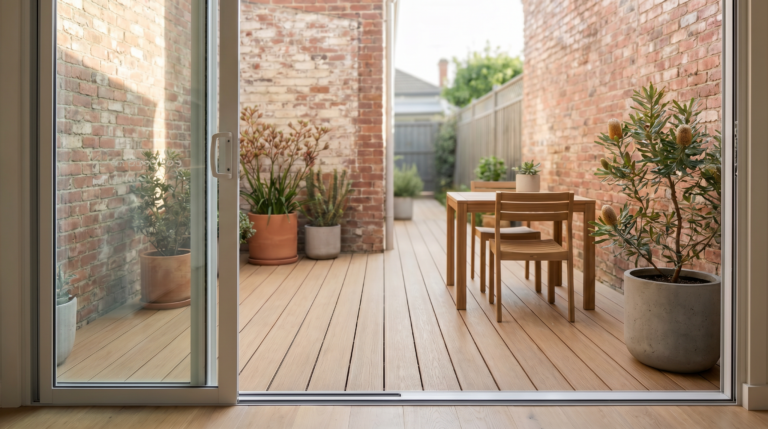
If you’re deciding between a traditional timber deck or upgrading to composite, chances are you’ve run into a lot of blogs making a lot of claims.
When you’re committing thousands to a renovation, claims don’t cut it. Whether you’re designing your dream entertaining space, planning a build budget or looking to maximise your home’s long-term appeal, understanding the real numbers behind your investment is critical.
We’ll break down the initial installation costs, upkeep expenses and long-term resale returns for timber and composite decking across Australia.
The Short Answer: Yes. Here’s How Much
The answer is yes: adding a deck will almost always increase property appeal and dollar value. Across broader Australian market data, outdoor living extensions regularly rank among the best home renovations for resale, because buyers treat a functional outdoor area like an extension of the indoor living space.
Industry data shows that natural timber decks often recoup a higher initial payback percentage, sitting at around 95% compared to composite’s 88%. On paper, timber appears to take the lead, but that’s just because timber is a lower upfront cost. Bear in mind that these numbers reflect the US market, although they are in line with our experiences here in Australia.
In reality, percentage payback is only half the equation. Composite decking commands a higher-end finish that adds more absolute dollar value to a home’s overall valuation. More importantly, once you factor in the thousands needed to oil, sand and maintain timber over a decade, composite wins decisively on total cost of ownership.
Composite vs Timber Decking: Upfront Cost Comparison
To assess your return on investment, you need to look at your upfront costs. In Australia, decking costs are divided into two main categories: material costs per square metre ($/m²) and structural/labour expenses.
Treated Pine, Hardwood and Composite Decking costs per square metre
Material prices vary dramatically depending on timber species and engineering. According to national averages, board costs break down as follows:
| Decking material | Material cost (board only) | Key characteristics |
| Treated pine | $40 – $80 /m² | Lowest upfront cost, needs frequent sealing, prone to warping/splintering under sun. |
| Hardwood (merbau / spotted gum) | $80 – $160 /m² | Mid-to-high initial cost, beautiful grain, needs annual oiling, prone to tannin leaching. |
| Composite decking (capped) | $85 – $200 /m² | Higher initial cost, fully capped protection, zero oiling/sanding needed, high UV and stain resistance |
Treated pine presents the lowest barrier to entry. Hardwoods like merbau or spotted gum sit in the middle tier, while capped composites represent a higher initial investment.
Don’t forget installation costs
Board prices are only part of the story. A deck needs a structural subframe (timber, steel or aluminium), footings, concrete, fasteners and professional labour.
Timber decks generally use face-screws or nails, whereas composite can rely on hidden clip systems and joist spacing, which usually adds $20 to $50 per square metre in fixings for a clean finish. Carpenter rates can range anywhere between $80 and $150 per hour, which translates to roughly $150 to $300+ per square metre in labour depending on site access, layout and complexity.
For a standard 30m² deck, the total installation costs are approximately as follows:
- Treated pine: ~$2,000 (materials) + ~$4,500 (labour and subframe) = ~$6,500 total ($215/m²)
- Hardwood: ~$3,600 (materials) + ~$5,400 (labour and subframe) = ~$9,000 total ($300/m²)
- Capped composite: ~$5,400 (materials) + ~$6,100 (labour and subframe) = ~$11,500 total ($383/m²)
Upfront, treated pine can save roughly $5,000 compared to composite, with hardwood in between. However, the upfront price is only day one of your investment.
The 10-Year Cost of Ownership (Where Composite Pulls Ahead)
To understand how composite vs wood deck resale value actually plays out, you need to calculate total holding costs over a decade.
Annual maintenance costs compared
Natural timber is an organic material that’s subject to weather, sunlight and moisture. Maintaining a deck requires ongoing care: between oils, stains and deck cleaners, DIY upkeep can cost $150 to $300 annually, with professional services even reaching up to $900 per year. Over a 10-year period, factoring in hours of sanding, scrubbing and oiling, timber maintenance can total anywhere from $2,500 to $6,000+.
For some natural wood types, maintenance is even more intensive. Our Hamptons Farmhouse case study from Toodyay found that the cost of maintaining blackwood timber outpaced savings, with composite decking pulling ahead in just 2 years.
In contrast, composites don’t need any sanding, oiling or staining. All you need to maintain a composite deck is dish soap, water and a brush, which adds up to around $200 in cleaning supplies over the same decade.
Lifespan and replacement cycles
In Australia’s extreme climate, where intense UV exposure and moisture can trigger cracking, warping and rot, lifespans will differ significantly across materials. Traditional timber options rely heavily on ongoing sealing and oiling to survive:
- Treated pine: Typically reaches a 10 to 15-year lifespan before needing replacements and repairs.
- Hardwood: Reaches around 15 to 20 years, but only if kept continuously sealed and oiled against water penetration and UV exposure.
Capped composite decking is designed specifically to minimise weather-caused breakdown. Because the composite core is encased in an impenetrable polymer shield, it resists rot, moisture absorption, termites and splitting without chemical treatment.
This durability lets composite boards deliver a 25 to 30+ year lifespan; by year 6 or 7, the cumulative cost of timber oil, tools and board repairs offsets the original price gap.
Why Composite Decking Adds Resale Value
When experts are assessing the value of a house, they look closely at material conditions and ongoing maintenance obligations for potential buyers.
Composite decking creates move-in ready spaces
Today’s home buyers (especially families and professionals aged 30 to 50) put a premium on low-maintenance living.
When a potential buyer inspects a property with a 5-year old timber deck, most just see another weekend project full of sanding and oiling. A weathered timber deck can quickly turn into a negotiation point to lower the price.
On the other hand, a clean composite deck presents as a modern, move-in ready feature that doesn’t immediately demand attention every weekend.
The halo effect
Property valuers often refer to the “halo effect”. High-end, durable materials send a subtle psychological signal to buyers: “this home has been built and maintained with high standards.”
An outdoor space using composite elevates the perceived quality of the whole backyard, bridging the transition between indoor living areas and the garden. This visual continuity helps justify higher asking prices during home opens and when the property goes to market.
Can you over-capitalise on a deck?
Of course. Over-capitalisation occurs when you spend more on an improvement than the local property market can return.
According to general valuation guidelines, a deck addition should account for around 2% to 5% of your home’s total value:
- $750,000 house: Deck budget of $15,000 to $37,500.
- $1,200,000 house: Deck budget of $24,000 to $60,000.
Installing a $60,000 deck on a small cottage in an entry-level market where buyers are prioritising basic accommodation isn’t going to yield a huge return. Match your materials and scope to your suburb’s price ceiling.
When Decking as an Investment Doesn’t Make Sense
Short holding periods
If you’re planning to sell your property within 1 to 2 years, you won’t hold the home long enough to realise the savings of composite decking. In this specific scenario, a neatly stained treated pine or budget hardwood deck might offer a faster payback than composite.
Overbuilt decks in lower-value suburbs
If surrounding homes in your area have modest outdoor areas, building an oversized luxury deck may exceed buyer expectations and local property values. Keep the scale of your outdoor extension aligned with neighbourhood standards.
Poor installation eroding value
Material quality can’t fix poor construction. A composite deck installed with the wrong joist spacing, inadequate ventilation or incorrect footings will sag and warp over time, destroying value. Always ensure your deck complies with the supplier’s installation guide, the National Construction Code (NCC) and local council requirements.
Composite or Timber: What Makes Sense for Aussie Homeowners?
The right decision comes down to balancing your current budget with your long-term goals.
Timber makes sense if you’re working with a strict budget ceiling, plan to sell the property in 1 or 2 years, or genuinely enjoy hands-on DIY maintenance like sanding and oiling.
Capped composite is the practical choice if you plan to hold the property for 5 years or more, want to minimise your total cost or want a low-maintenance feature that appeals directly to busy buyers at resale.
Ultimately, timber offers a lower barrier to entry on day one, while capped composite decking acts is one of the best ROI renovations over time, freeing up your weekends, reducing upkeep and maintaining its visual appeal for future buyers.