Composite decking can get hot underfoot, fade, scratch, grow surface mould, expand and contract with temperature, and turn slippery when it’s dirty or wet. Other common problems, such as warping, sagging boards, loose fixings and rotting subframes, usually trace back to installation or product choice rather than the material itself.
Most of these problems are preventable, and the rest are manageable if you know what to expect. Composite decking is designed to remove the sanding, oiling and painting that come with a traditional timber deck, but no outdoor surface is completely maintenance-free.
That said, not all composite decking is made the same way. Board construction, capping, installation and upkeep all affect how a deck performs over time. This guide covers each problem, what to do about it and how to avoid it, so you can choose decking that’s suited to your home and lifestyle.
Composite Decking Problems at a Glance
Most composite decking problems come from heat, moisture, movement or installation. Here is each one with its usual cause, fix and prevention.
| Problem | Usual cause | What to do | How to prevent it |
|---|---|---|---|
| Heat | Dark colours and direct sun | Add shade or rugs on barefoot paths | Choose a lighter colour, test a sample in the sun |
| Slipperiness | Algae, mould or grime, smooth finishes | Clean the surface | Choose a textured profile, keep the deck clean and drained |
| Fading | UV exposure, uncapped or partly capped boards | Not reversible, replace boards if severe | Choose a UV-stabilised, fully capped board |
| Warping and buckling | Tight gaps, fixings that restrict movement | Reset the boards and clips | Follow the gap and fixing instructions |
| Mould and algae | Debris and moisture left on the surface, shade, poor airflow | Brush with warm water and a deck cleaner | Sweep regularly, improve airflow |
| Staining | Grease, tannins, rust and spills left to sit | Clean promptly with a suitable cleaner | Wipe up spills, use furniture pads |
| Scratches | Dragged furniture, grit, pet claws | Sand out (uncapped boards only), replace boards if deep | Lift furniture instead of dragging it or apply furniture pads before moving |
| Sagging or bounce | Joists spaced too wide, weak framing | Add joists or reframe | Frame to the board’s joist spacing |
| Loose boards or noise | Wrong or over-tightened fixings, tight gaps | Re-seat clips, check the joist underneath | Use the specified fixing system |
| Subframe rot | Moisture trapped against timber joists | Replace affected joists | Use a protected or non-rot subframe, ventilate |
| Pooling water | Flat or uneven frame, blocked gaps | Clear gaps, correct the frame | Build in a slight fall |
| Fire | Combustible material, debris, embers | Clear debris, check the rating | Choose a product rated for your zone |

Why Can Composite Decking Warp, Crack Or Deteriorate?
Warping, cracking and deterioration are problems that can occur with some composite decking products, but they’re not all caused by the same thing.
Composite decking naturally expands and contracts as temperatures change. NewTechWood boards expand by around 1.1mm per metre between 15°C and higher ambient temperatures. This movement needs to be accounted for when the deck is installed, instead of trying to stop the boards from moving at all.
It’s also why the fixing system matters. Our hidden fix system lets the boards expand and contract without compromising the appearance or integrity of the deck. Proper spacing, ventilation and substructure requirements are also crucial elements of the installation.
Moisture is another. An exposed composite core can absorb moisture, especially via unprotected grooves or edges. Depending on the construction, this can contribute to swelling, cupping, cracking and degradation over time. We use full protective capping specifically to protect the core from moisture, UV exposure, mould and other environmental factors.
That doesn’t mean you can ignore the installation instructions, though. Decking needs to have adequate airflow underneath, and any cut ends or edges that’ll be exposed might need some extra sealing.
Another thing to keep in mind: reflected sunlight from some low-emissivity windows can create temperatures well beyond normal outdoor exposure. In extreme cases, this can cause discolouration, warping, sagging or accelerated weathering.
What to do:
- If boards have started to buckle or lift, reset the boards and clips and check the gaps against the installation guide.
- Replace any boards that have cracked or swelled, and seal exposed cut ends on the replacements.
- If the damage is on a section facing a window, look for reflected glare. Shade the area with an awning, screen or planting, or talk to your glazier about the window’s reflectivity before replacing boards.
- If boards keep moving or deteriorating for no clear reason, contact your installer or supplier, and check your warranty terms.
How to prevent it:
- Leave the gaps specified in the installation guide, including end gaps and gaps where boards meet a wall or other fixed structure.
- Use the hidden fix system specified for your board, and don’t over-tighten or mix clip brands. Boards need to move freely.
- Build the frame to the substructure requirements and allow airflow underneath, particularly in humid or coastal areas.
- Seal cut ends and any exposed edges as the manufacturer instructs.
- Choose a fully capped board, including the grooves, so the core is protected from moisture and UV.
- Check for low-emissivity windows facing the deck before you install, and plan shade or screening if needed.
Why Do Some Decks Creak or Have Loose Boards?
Boards that tick, creak or lift are usually a fixing problem rather than a board problem. Clips that are over-tightened, mismatched or the wrong type can stop boards from moving freely, so the movement comes out as noise or a loose board. A loose or damaged joist underneath can do the same.
What to do: Re-seat or replace the affected clips and check the joist below the board.
How to prevent it: Use the fixing system specified for your board, don’t mix clip brands, and follow the gap spacing in the installation guide.

Is Composite Decking Slippery When Wet?
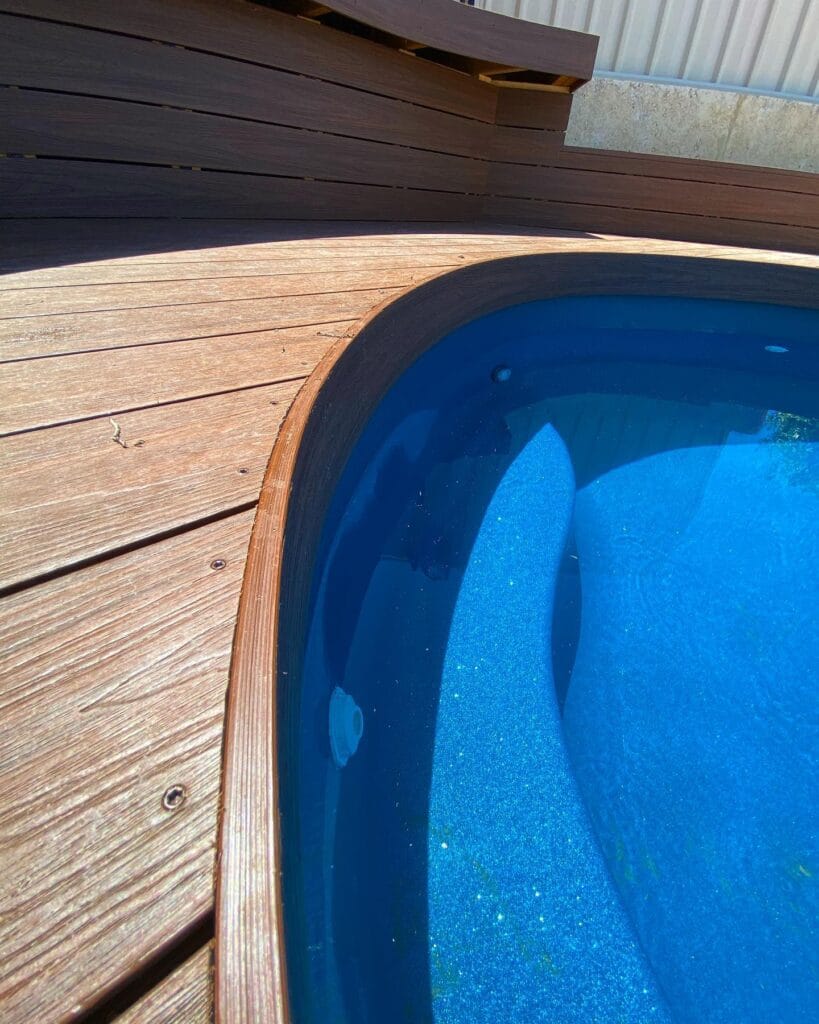
It can be. Plastic-based surfaces generally offer less grip when wet than timber and a film of algae, mould, pollen or grime makes it worse. Shaded areas, pool surrounds, steps and decks under trees are the most affected.
The board’s surface profile matters as much as the material. Textured or grooved profiles are designed to keep more grip than smooth ones, but no profile replaces cleaning.
What to do:
- Brush the surface with warm, soapy water to remove the algae and grime that cause slipperiness.
- Clear leaves and debris from the surface and gaps, especially in autumn.
How to prevent it:
- Choose a textured profile for steps, pool areas and shaded decks.
- Make sure water drains off and out through the gaps rather than pooling.
- Trim overhanging branches to improve light and airflow.
Read more about slip ratings and how NewTechWood is engineered for slip-resistance.
Does Composite Decking Fade?
Some fading is normal. Any material that spends years outdoors is exposed to plenty of UV radiation, so you can’t expect a surface that will never change colour. Fading tends to show first on the sunniest parts of a deck, such as edges and corners, which can leave tones slightly uneven.
That said, not all composite decking is made equal. How much a board fades depends on its construction, with uncapped boards more susceptible to fading. NewTechWood’s superior technology gives the boards great Ultra-Violet resistance. When installed, cared for and maintained properly in the residential exterior deck environment, NewTechWood products provide fade resistance.
What to do: Fading isn’t reversible. If it becomes unacceptable, replace the affected boards, bearing in mind that new boards can stand out against older, faded ones.
How to prevent it:
- Choose a capped board designed for UV resistance rather than choosing on price alone.
Does Composite Decking Get Hot in the Sun?
Yes. Composite decking can get hotter underfoot than timber in direct sun, and darker colours absorb more heat than lighter ones. How hot it gets depends on colour, orientation, shade, airflow and nearby surfaces such as concrete or walls that reflect heat back onto the deck.
Heat is one of the most important things to consider in Australia, especially for pool surrounds and decks used barefoot. Composite decking might not be the right choice if you expect it to stay cool in summer sun.
What to do:
- Add shade with a pergola, umbrella or shade sail.
- Lay outdoor rugs along the paths people walk barefoot.
How to prevent it:
- Choose a lighter colour for sunny areas that will be used barefoot.
- View a full-size sample outdoors in direct sun, not just in a showroom.
- Allow airflow under the deck, which also helps with moisture.
What About Fire?
Composite decking is a combustible material, as is timber and a deck can collect leaves and debris that catch embers. If you’re in a bushfire-prone area, your deck may need to meet a specific Bushfire Attack Level (BAL) under AS 3959, and some sites require a non-combustible subframe. Check your council’s requirements before you buy and keep gaps and the area under the deck clear of leaves and debris.
Learn more about composite decking and BAL ratings.
Does Composite Decking Scratch?
Normal activities incurred in day to day living will not scratch your composite decking. NewTechWood has an outer capping of polymer that encapsulates the board in an impermeable layer of protection that provides scratch, stain and fade resistance.
However, like timber, or any other surface, excessive activities can damage the surface. Skateboarding, dragging heavy furniture, dancing in stiletto heels can still mark the surface. To ensure your deck looks as good as new for as long as possible, we recommend fixing pads under your outdoor chairs to stop the constant dragging wearing away the capping over time. Unlike timber decking, composite decking cannot be sanded back as this cuts through the protective layer.
How to prevent it:
- Lift furniture, BBQs and planters instead of dragging them, and use two people for heavy items.
- Fit felt or rubber pads under furniture legs.
- Put doormats at entries to catch grit.
- Expect wear first in high-traffic spots such as BBQ areas, steps and gates.
What About Mould and Staining?
Composite decking can develop surface mould, especially when moisture, dirt, leaves and other organic debris are left to sit on the surface. This isn’t unique to composite timber, either. Any surface can develop mould when the conditions encourage it.
The build of the board matters when it comes to mould. With a fully capped board like NewTechWood’s, mould and other contaminants are kept at the surface rather than being able to penetrate into an exposed core. Regular cleaning can remove the buildup and help keep the boards looking their best.
Staining works in much the same way. Composite decking resists everyday spills, but that doesn’t mean stains should be left sitting on the surface. Food, drinks, grease and other spills should be cleaned up quickly, not left to sit on the boards.
While composite avoids most of the maintenance tasks associated with timber, it still needs some basic care. NewTechWood doesn’t need sanding, oiling or painting, but regular sweeping and occasional cleaning are part and parcel of owning an outdoor deck.
That’s what’s meant when composite is described as low maintenance, not maintenance free. Instead of regularly having to refinish the boards to protect them from the elements, most of the work involves keeping the surface clean.
What to do:
- Clear leaves and debris from the gaps so water can pass through.
- If puddles keep forming, check the joists for dips or settling. Shimming or replacing them restores the right fall.
How to prevent it:
- Build in a slight fall so water runs off the deck, and keep the frame level across its width.
- Maintain the specified gaps between boards so surface water can drain through.
- Allow ventilation under the deck, particularly in humid or coastal areas and wet climates.
Why Do Some Composite Decks Sag or Feel Bouncy?
Because composite boards are generally less stiff than hardwood or dense timber, they rely on the framing underneath for support. When joists are spaced too far apart, boards can flex, feel bouncy and eventually sag between supports. Heat can make this worse, as boards become slightly more pliable in hot weather and may bow under heavy planters or furniture.
This catches people out when replacing a timber deck. Joist spacing that suited timber boards may be too wide for composite, so the frame sometimes needs reworking, which adds cost and time.
What to do: If a deck already feels bouncy, adding joists or blocking under the affected area usually improves it. Persistent sagging points to a framing problem rather than a board problem.
How to prevent it:
- Frame to the joist spacing specified for your board. Always consult the relevant installation guides.
- Use closer joist centres for diagonal layouts, stairs and heavy-use areas, where manufacturers commonly specify tighter spacing.
- Check that the frame is straight, level and sound before laying boards.
- Follow the substructure requirements from the start.
Can the Subframe Under Composite Decking Rot?
Yes, if it’s made of timber. Composite boards resist rot, but many decks still sit on a timber frame and timber decays where moisture is trapped against it: at cut ends, where water collects between the boards and the top of the joist, and where the deck meets the house. A deck can look fine on top while the structure underneath deteriorates, and composite boards can last much longer than a low-grade timber frame.
Always replace softened or discoloured joists on a new install. Spongy joists, boards that move for no clear reason or a musty smell from underneath are all warning signs.
Learn how to build a frame for your deck from scratch.

Why Different Composite Decking Products Perform Differently
“Composite decking” describes a category of products, not just one material or construction method. They can differ in their composition, manufacturing processes, surface protection and how much of the board is protected from the elements. An issue with one product won’t necessarily occur with another. Many of the complaints you’ll read online come from older, uncapped boards or low-quality brands, so don’t assume they apply to a modern capped product.
That means you shouldn’t assume that an issue with one composite product will occur in another. The most important difference will be whether or not the board has a protective cap, and how that cap is applied.
Uncapped vs Capped Composite Decking
Uncapped composite decking leaves the core exposed to the environment. With some products, this leaves the board more vulnerable to moisture, UV exposure, mould, staining and everyday use.
Capped composite decking adds a protective layer around all or part of the board. Keep in mind, however, that “capped” doesn’t necessarily mean the whole board is protected. The extent of the capping and the construction of the board can vary between different products.
Cut ends and unprotected grooves can still expose the core, and caps can wear in high-traffic areas over time. When comparing boards, ask the supplier which parts are actually protected, not just whether the board is capped.
Why 360° Capping Matters
NewTechWood uses its special protective layer around all four sides of the board, including the grooves. This 360° protection is designed to shield the composite core from moisture, UV exposure and other environmental factors.
The result is a board designed to retain the benefits of composite decking while providing extra protection where an exposed core could otherwise be vulnerable.
The way a board looks in the showroom can only tell you so much. Its construction and the way it’s protected from the elements will have a much bigger impact on how the board will perform.
How To Avoid Most Composite Decking Problems
Proper product choice, installation and care prevent most of the problems above:
- Match the board to the site. Consider sun exposure, barefoot use, rain, coastal or humid conditions, and whether the area is bushfire-prone.
- Test samples outside. Check colour, heat and texture in direct sun and shade, not just indoors.
- Check what’s protected. Ask which parts of the board are capped, not just whether it is.
- Frame it properly. Use the specified joist spacing, a sound subframe and ventilation underneath.
- Allow for movement. Use the right gaps and fixing system, set the way the instructions say.
- Plan drainage. Build in a slight fall and keep gaps clear so water doesn’t pool.
- Use the right fixings. Don’t mix clip brands or substitute screws.
- Use a competent installer. Find an installer who follows the manufacturer’s instructions, and check local permit and bushfire requirements.
- Keep up with basic care. Sweep away leaves and debris, clean spills as they happen and give the surface a proper clean when needed.
- Protect the surface. Lift furniture instead of dragging it and use pads.
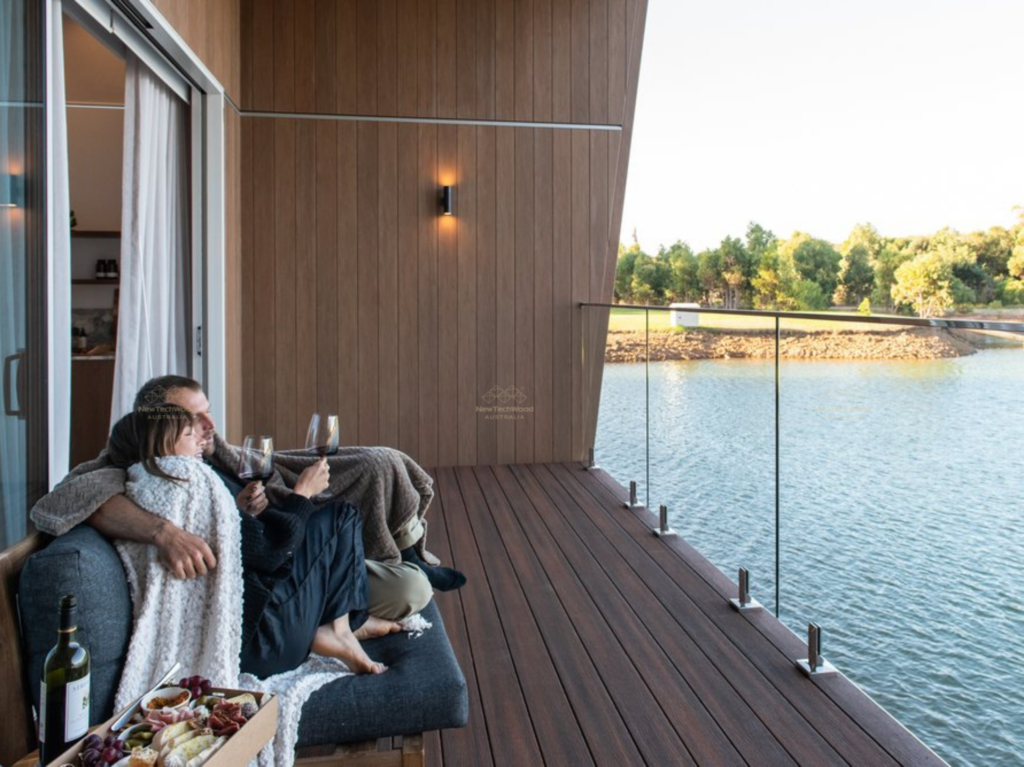
Is Composite Decking Still Worth It?
Yes. For many homeowners, composite decking offers a better balance of appearance, durability and maintenance than traditional timber.
The biggest advantage is what happens (or doesn’t) after the deck is installed. Timber looks beautiful, but maintaining that appearance means regular cleaning, sanding, oiling and refinishing. Composite removes most of that work, giving you more time to enjoy your deck instead of working on it. For homeowners that want the look and feel of a timber deck without the same level of upkeep, that tradeoff can make composite a compelling alternative.
The problems above are real, but most are preventable with the right board, a sound frame, correct installation and basic cleaning. At NewTechWood, we think it’s a tradeoff worth making. You get the warmth and appearance of timber, without signing yourself up for the recurring work that comes with keeping a timber deck looking its best. For a space you want to use and enjoy for years, rather than constantly maintain, that matters.
So, is composite decking worth it? We think the answer is a clear yes.